Abstract
With the increasing size of HPC computations, faults are becoming more and more relevant in the HPC field. The MPI standard does not define the application behaviour after a fault, leaving the burden of fault management to the user, who usually resorts to checkpoint and restart mechanisms. This trend is especially true in stencil applications, as their regular pattern simplifies the selection of checkpoint locations. However, checkpoint and restart mechanisms introduce non-negligible overhead, disk load, and scalability concerns. In this paper, we show an alternative through fault resilience, enabled by the features provided by the User Level Fault Mitigation extension and shipped within the Legio fault resilience framework. Through fault resilience, we continue executing only the non-failed processes, thus sacrificing result accuracy for faster fault recovery. Our experiments on some specimen stencil applications show that, despite the fault impact visible in the result, we produced meaningful values usable for scientific research, proving the possibilities of a fault resilience approach in a stencil scenario.
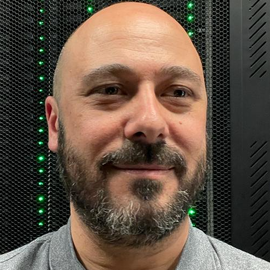
Gianluca Palermo
Full Professor
Gianluca Palermo received the M.Sc. degree in Electronic Engineering in 2002, and the Ph.D degree in Computer Engineering in 2006 from Politecnico di Milano. He is currently an associate professor at Department of Electronics and Information Technology in the same University. Previously he was also consultant engineer in the Low Power Design Group of AST – STMicroelectronics working on network on-chip and research assistant at the Advanced Learning and Research Institute (ALaRI) of the Università della Svizzera italiana (Switzerland). His research interests include design methodologies and architectures for embedded and HPC systems, focusing on AutoTuning aspects.